


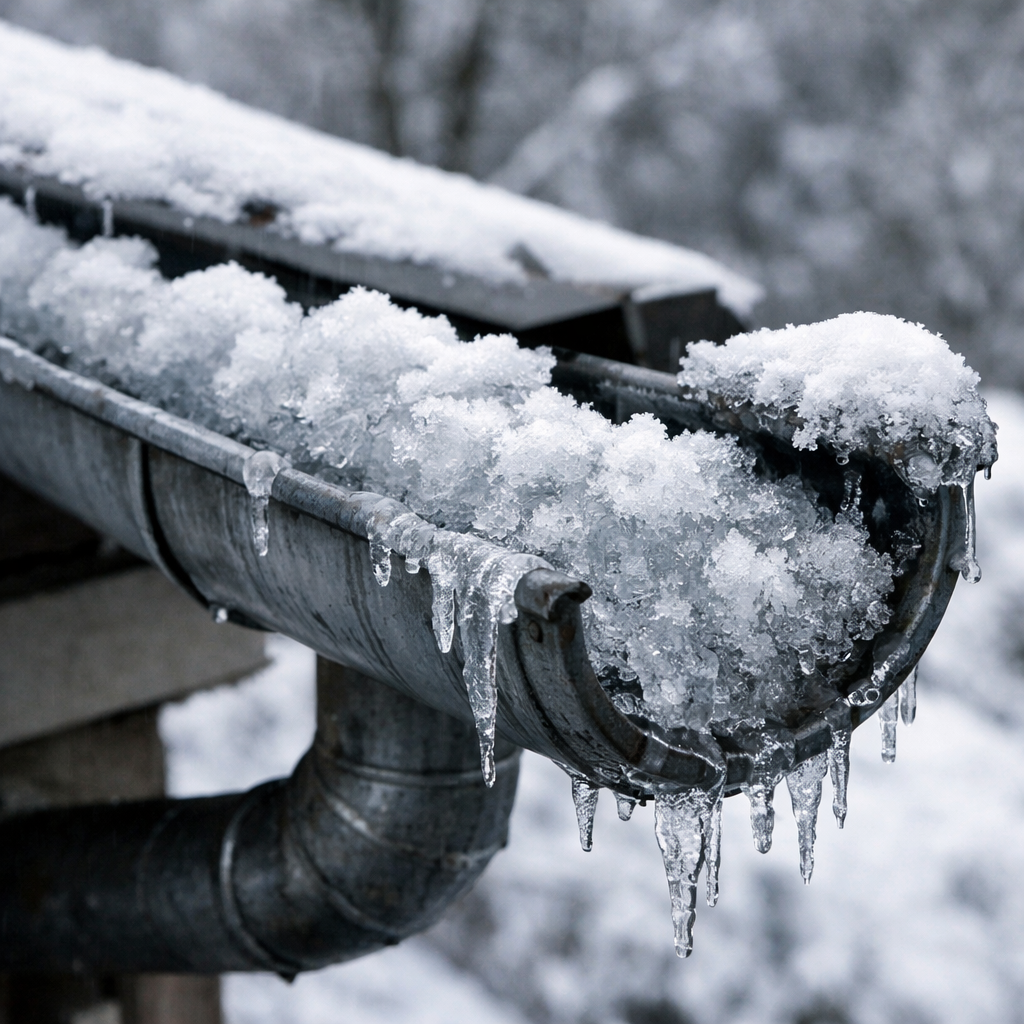
Winter 2026 was a brutal reminder of what Canadian winters can do. Toronto saw 88.2 centimetres of snow in January alone — the snowiest January since records began in 1937 — with a single day bringing 46 centimetres down on Pearson Airport, a record that still stands. For many homeowners, that season raised an urgent question: do leaf-guard gutters prevent ice dams, or are they simply the wrong tool for the job?
Ice dams are ridges of ice that build up along the lower edge of a roof. They form when heat escaping from inside the home melts snow on the upper roof, and that meltwater refreezes as it reaches the colder eaves. The result blocks proper drainage — and the consequences can be far worse than they look. Water backs up under shingles, seeps into ceilings, and damages walls. Toronto’s notorious freeze-thaw cycles, where temperatures swing above and below freezing repeatedly through February and March, make the problem especially persistent. So before investing in a gutter protection system, you need to understand exactly what leaf guards can and cannot do.
Ice Dam Damage: Hidden Costs and Root Causes
So, do leaf guard gutters prevent ice dams? To answer that, you need to understand what actually triggers them — and it’s not the snow or the cold. The real culprit is heat escaping from inside your home through a poorly insulated or ventilated attic. That warm air heats the upper roof, melting the snow above. The meltwater then flows down toward the eaves, which sit over unheated space and stay cold. There, the water refreezes and builds up into a dam.
What happens next is where the real damage begins. Trapped water backs up under shingles, soaking into insulation, staining ceilings, peeling paint, and encouraging mould in places you’ll never see — until it’s too late. In severe cases, the sheer weight of ice tears gutters clean off the house or causes roof edges to sag. The financial toll adds up fast: roof replacement from ice dam damage alone can run between $15,000 and $30,000.
Types of Leaf-Guard Gutters and Their Effect on Ice Dams
Leaf-guard gutters are barriers that sit over your gutters to keep out leaves, debris, and snow. They come in several forms — mesh screens, foam inserts, and solid covers — each with a different approach to the same problem.
- Mesh screens: fine or micro-mesh variants that block small debris while allowing water to pass.
- Foam inserts: fill the gutter channel to block debris but can impede flow if saturated or iced over.
- Solid covers: sit over the gutter with a small drip edge; effectiveness varies with design and installation.
When debris builds up, melted snow has nowhere to go and pools at the roof edge, creating exactly the conditions ice dams need. Beyond that, accumulated debris acts as insulation inside the gutter, disrupting temperature consistency and feeding the freeze-thaw cycles that cause ice to form. Some modern systems address this by maintaining steadier gutter temperatures throughout winter.
For Toronto’s climate, micro-mesh guards tend to perform best — they block debris while still letting water drain efficiently. But not every product holds up the same way. Certain reverse-curve designs can actually backfire: snow and ice pack into the gutter interior, adding weight that pulls the whole system away from the fascia. Poor installation makes things worse, blocking drainage at the very moment it matters most.
Attic Insulation, Ventilation, and Other Protective Measures
Leaf guards help by keeping gutters clear and draining meltwater efficiently — but they don’t touch the real problem. That starts in the attic.
The Ontario Building Code recommends R-50 to R-60 insulation values for attics, yet many older Toronto homes fall well short of that. Upgrading costs between $1,200 and $7,500 depending on attic size and insulation type, though rebates through Enbridge’s Home Efficiency Rebate Plus can offset a meaningful chunk. Done right, better insulation cuts heating bills by 15 to 25 percent — roughly $400 to $900 a year in savings.
Ventilation works hand in hand with insulation. Intake vents in the soffits draw cold air into the attic, while exhaust vents near the ridge push warm air out. The goal is to keep attic temperatures close to outdoor temperatures, so snow melts evenly rather than running down to refreeze at the eaves.
For homes that still struggle despite good insulation, heat cables offer a practical backup. Installed along the roof edge, they prevent ice from building up where it causes the most damage. Expect to pay between $1,500 and $5,000 installed. And if a roof replacement is already on the horizon, adding an ice-and-water shield membrane under the shingles adds a last line of defence against water infiltration. Leaf guards remain a helpful addition but should be part of a complete approach to preventing ice dams.
Eavestrough and Gutter Leaf Guard Installation in Toronto
If ice dams and clogged gutters are a real concern for your Toronto home, the right gutter protection system makes all the difference. Branova Siding offers professional eavestrough and gutter leaf guard installation in Toronto — keeping your gutters debris-free, properly draining, and ready to handle even the harshest winters. With a patented debris-shedding design and custom-fitted guards, Branova guarantees clog-free performance season after season. Their experienced team works with precision and care, ensuring seamless results and lasting protection for your home. Get your free quote today and stop ice dams before they start.


