


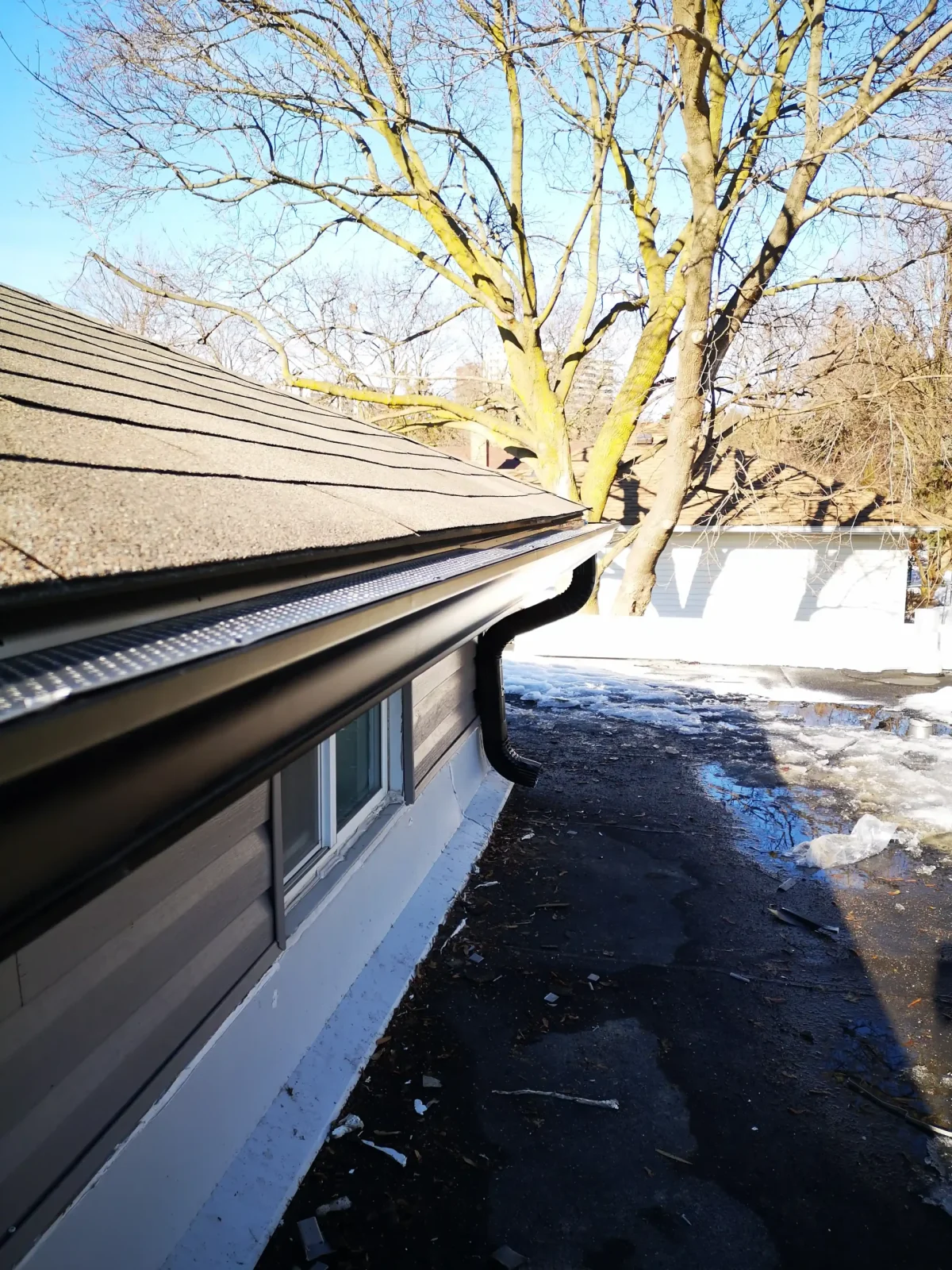
In contemporary residential architecture, ensuring effective water drainage is crucial for preserving the structural soundness of homes. Inadequately managed water can lead to significant complications like foundation damage, soil erosion, and flooding in basements. To address these challenges, the incorporation of gutter guards, eavestroughs, and downspouts has become increasingly important. Each of these elements plays a vital role in redirecting rainwater away from the home, thereby preventing various potential water-related damages.
Gutter guards act as the first line of protection in a home’s drainage setup. Their purpose is to prevent leaves, twigs, and other debris from obstructing the eavestroughs, commonly known as gutters. Clogged gutters cannot effectively channel water, which can result in overflow that damages the foundation and landscaping surrounding the home. Incorporating gutter guards can substantially lower the risk of such blockages. These guards are available in multiple varieties, including mesh screens, foam inserts, and brush guards, each tailored to meet different environmental challenges and types of debris.
Eavestroughs and Their Importance
Eavestroughs, often called gutters, are essential parts of a home’s water drainage setup. Their main role is to channel rainwater away from the roof and foundation, preventing water from collecting around the base of the home. A thoughtfully designed eavestrough system is vital, particularly in regions that receive heavy rainfall. For instance, wider eavestroughs may be essential to handle larger volumes of water, ensuring that overflow does not occur.
The choice of materials for eavestrough construction significantly affects their performance and upkeep requirements. Aluminum and vinyl are common selections due to their durability and resistance to corrosion. It is important to consider the local climate when choosing materials. In areas with significant snowfall, for example, more robust materials may be necessary to bear the weight of accumulated snow and ice. Moreover, correct installation and positioning of eavestroughs are paramount; improper angles can hinder effective water flow towards the downspouts, leading to inefficient drainage and potential structural concerns.
Downspouts and Their Role in Drainage
Downspouts represent the final element in an effective water drainage system for residential properties. Their function is to guide the flow of water from the eavestroughs down to the ground or into a drainage system. The dimensions and placement of downspouts are crucial elements that influence the overall effectiveness of the entire water drainage system. Downspouts that are too small can create backups in the gutters, while those that are poorly positioned may direct water toward the foundation, undermining the protective advantages of the eavestroughs.
To enhance drainage efficiency, homeowners should strategically position downspouts around the property, ideally directing them toward landscaped areas that can absorb the water or to a dedicated drainage system. Additionally, downspouts may be equipped with extensions to more effectively guide water away from the foundation. Routine maintenance remains essential; homeowners should check downspouts for clogs or damage, particularly after heavy rains, to ensure that water flows freely and efficiently away from the home.
Benefits of an Integrated Drainage System
The incorporation of gutter guards, eavestroughs, and downspouts not only improves water drainage efficiency but also reduces maintenance demands. Homeowners frequently confront the challenging task of cleaning gutters, which can be hazardous and labor-intensive. Gutter guards help mitigate this challenge by preventing debris accumulation, thus decreasing the need for frequent cleanings. This not only conserves time but also minimizes the risk of injuries associated with climbing ladders for maintenance duties.
Furthermore, a well-maintained drainage system safeguards the home against expensive water-related complications. For example, by averting water pooling around the foundation, the chances of soil erosion and subsequent structural damage are notably diminished. Homeowners can relax knowing that their investments are protected from the elements. Additionally, many varieties of gutter guards and eavestrough materials are designed to endure severe weather conditions, providing long-lasting protection and lessening the likelihood of repairs or replacements. Ultimately, the careful integration of these components is a critical measure for ensuring the safety and durability of residential structures.
Enhancing Water Drainage Efficiency in Homes
Ensuring the utmost efficiency of water drainage in residential buildings requires a comprehensive understanding of the synergy between gutter guards, eavestroughs, and downspouts. Investing in professional services can significantly enhance the performance of these components. Expert installation and maintenance of Eavestrough, gutters, and leaf guard installation and cleaning services can safeguard homes against water damage, providing homeowners with lasting peace of mind. By opting for these specialized services, residential properties can maintain optimal drainage efficiency, minimizing the risks associated with clogged systems and potential flooding. Embrace the benefits of a well-optimized drainage system today.


