


By March, Toronto vinyl siding has taken a beating. Road salt, freeze-thaw grime and mildew from melting snow leave a film that does not go away on its own. Improper cleaning can damage the panels.
Vinyl does not absorb water, which is why it holds up well in a wet climate like ours. Dirt, pollen and organic material cling to the surface. When rain or humidity soaks into that layer of grime, mould and mildew start to grow. Shaded spots are the worst: under eaves, along the north side of the house, anywhere the sun rarely reaches.
Toronto gets about 830 mm of precipitation a year. Summer humidity encourages fungal growth. Winter piles on salt residue and road grime for months at a stretch. By the time April arrives, many homes in the GTA are overdue for a cleaning.
The basics are simple: soap, water and a soft brush. For tougher stains there are a few safe options.
Spring and fall timing
Vinyl siding in Toronto does well with two cleanings a year: April or May for spring, and September or October for fall.
Spring cleaning tackles salt residue, mildew from snowmelt and months of accumulated grime. Try to clean on a mild, overcast day. Soap that dries before you rinse it leaves streaks that are harder to remove than the original dirt.
Fall cleaning clears pollen, dust and organic buildup before it freezes in place. Stains that sit through a Toronto winter bond to the surface, and mould that overwinters gets a head start come spring.
Avoid cleaning in direct afternoon sun, especially in summer; the heat works against you. Some homes need more frequent attention — mature trees drop debris that feeds mould, north-facing walls stay damp longer, and properties near busy roads pick up grime fast. A quick rinse with a garden hose between full cleanings keeps buildup from getting ahead of you.
Tools and prep
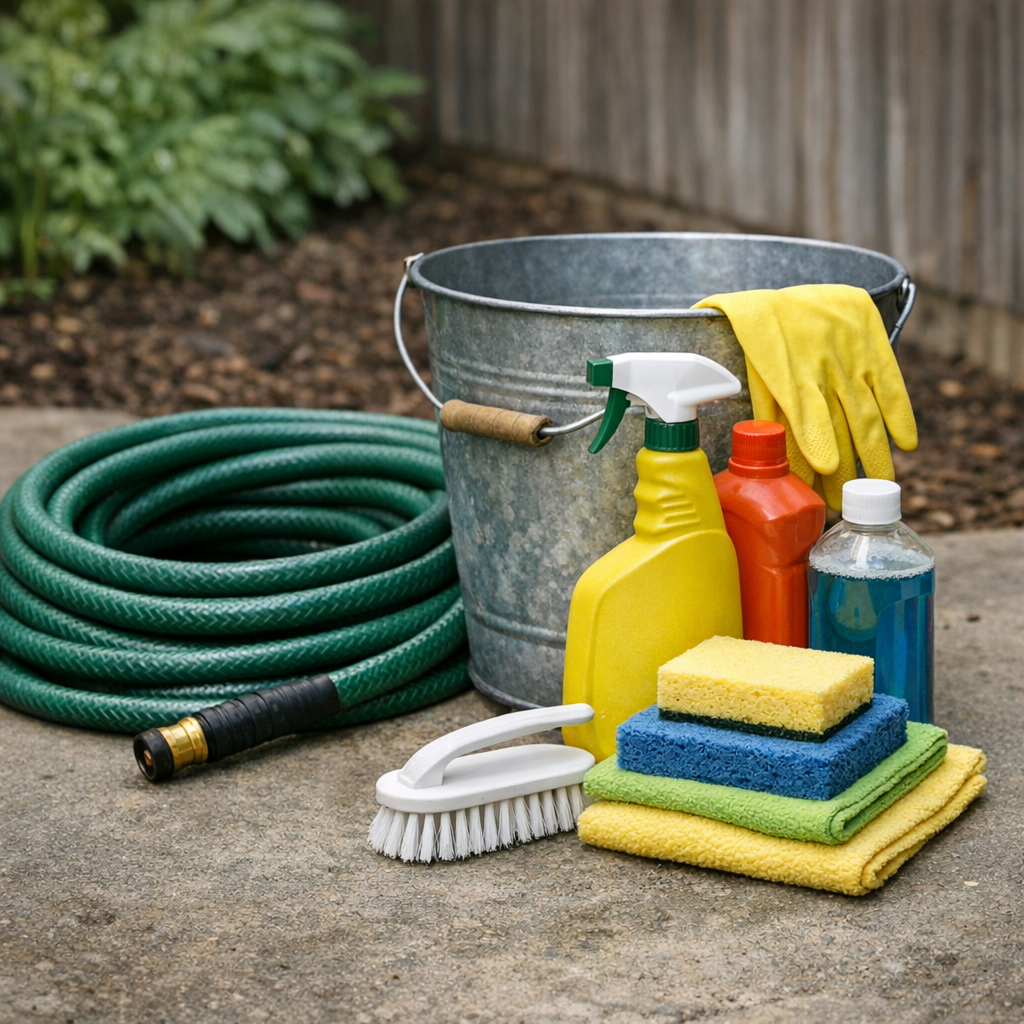
Soft-bristled brush, a bucket, dish soap or laundry detergent, garden hose with a spray nozzle, gloves, safety glasses and old clothes that cover your skin.
For two-storey sections, a telescoping brush handle can save you from the ladder; some extend up to 30 feet. If you do need a ladder, make sure it is stable on level ground before you climb.
Close all windows and doors before you start. Water finds gaps, especially under pressure. Cover nearby plants with plastic sheeting — even mild cleaning solutions can harm landscaping. Move outdoor furniture clear of the work area.
If you are dealing with mildew, add a face mask. Mould spores are not something you want to breathe in.
Mix about one-third cup of dish soap into two gallons of warm water, not hot. Apply with a soft brush from the bottom up, working in sections. Dirty water running down over dry siding leaves streaks. Rinse from the top down once each section is scrubbed. Do not soap the whole wall at once, or the solution will dry before you rinse it.
Mould, mildew and stubborn stains
Black or dark green patches under the eaves, along the north wall or near downspouts are mould and mildew. They settle wherever moisture lingers and sunlight does not reach. Leaky gutters make it worse.
For moderate growth, a 70:30 mix of water and white vinegar in a spray bottle works well. Let it sit for 15 minutes before scrubbing with a soft brush, then rinse thoroughly.
Deeper stains respond to oxygen bleach — one cup of oxygen-bleach powder to one gallon of warm water. It is gentler than chlorine and is less likely to affect garden beds if some runs off. For severe mildew, a stronger mix is an option: one-third cup of detergent, two-thirds cup of trisodium phosphate, one quart of household bleach and three quarts of water. Rinse thoroughly. Residue left on vinyl can discolour it over time.
Pressure washing
Pressure washing can work if you keep the PSI between 1,300 and 1,600. Higher pressure risks forcing water behind the panels, which is how mould ends up inside the wall cavity.
Use a 25- or 40-degree nozzle, hold the wand three to four feet from the surface, angle downward and use cold water only. Hot water softens vinyl.
Other stains and when to call for help
Oil and grease stains respond to Murphy’s Oil Soap or a commercial degreaser like Fantastik. Paint or tar may need a gentle abrasive; always test any product on a hidden spot first.
Cracks, warping or loose panels need attention before you clean. Pushing water into damaged siding during washing creates bigger problems than the stains you started with. If your siding shows gaps, buckling or persistent leaks, Branova Siding can assess whether the siding needs repair or just a good cleaning.
Upgrade Your Home with Branova Siding
When your vinyl siding is ready for more than just a good scrub — whether it needs repair, replacement, or a full upgrade — trust the experts at Branova Siding. As one of Toronto’s leading siding contractors, they specialize in vinyl and aluminum siding installation in Toronto, delivering top-quality workmanship backed by factory-certified installers. Serving the GTA for years, Branova Siding offers free estimates and a full range of exterior services, from siding to eavestroughs, soffits, and roofing. Give your home the protection it deserves — contact Branova Siding today and get started with a no-cost consultation.


