


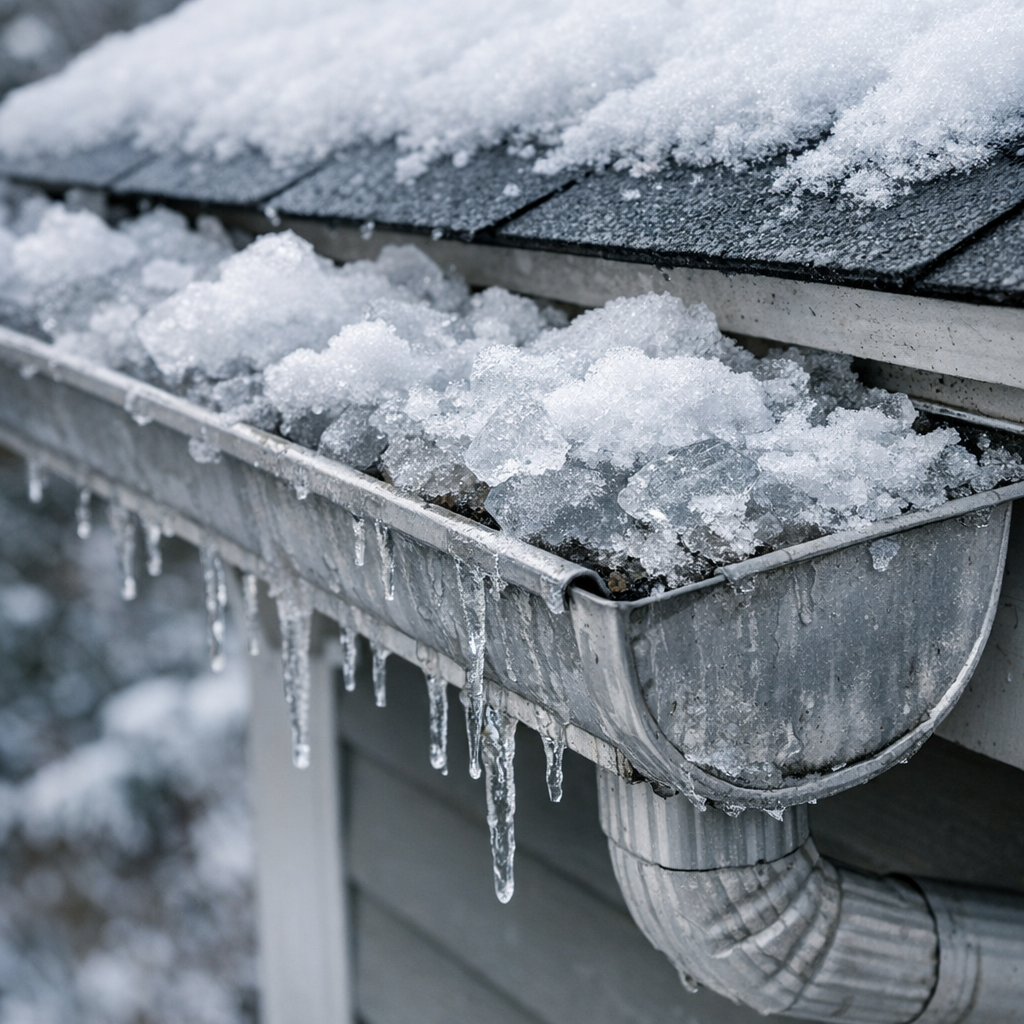
Winter in Canada is relentless — and your eavestroughs take the brunt of it. With over 100 freeze-thaw cycles in a single season, ice builds up fast, and the damage it causes can be costly. When gutters freeze solid, water backs up under your shingles and seeps into your home, quietly damaging ceilings and insulation.
The weight of ice alone can pull gutters away from the roofline, warping siding and cracking downspout seams in the process. The risks are real — but so are the solutions. With the right tools and a careful approach, minor ice buildup is something you can tackle yourself.
Ice Dam Formation in Eavestroughs
What actually causes ice to build up in your eavestroughs? It comes down to three factors: snow on the roof, freezing outdoor temperatures, and a poorly insulated attic. As little as five centimetres of snow is enough to start the process.
Here’s the cycle. Warm air escaping from your living space heats the attic, which in turn warms the underside of the roof deck. The snow above begins to melt, and the water flows down toward the eaves — but the eaves extend beyond the heated portion of your home, so they stay cold. The meltwater hits that cold edge and refreezes. Each time this happens, the ice ridge grows a little larger, eventually forming a dam that prevents water from draining properly.
Once that dam is in place, trapped water has nowhere to go but sideways and upward, finding gaps beneath your shingles. This is the moment a drainage problem becomes a structural one.
Tools and Step-by-Step Removal Method
Start with the right tools: a roof rake, calcium chloride ice melt, nylon stockings or mesh bags, non-slip boots, and gloves. That’s all you need for most situations.
First, use the roof rake to pull snow off your roof from ground level — no ladder required. Models with wheels glide over shingles without scratching them. Clearing snow cuts off the source of the problem before it worsens.
Next, fill nylon stockings or mesh bags with calcium chloride and lay them across the ice dam so they hang slightly over the eavestrough’s edge. The melt creates drainage channels through the ice, giving trapped water a way out. Calcium chloride is safe for gutters — unlike rock salt, which corrodes metal over time.
For minor blockages in the downspout, pouring warm water directly into the opening can break things loose quickly. Once the ice softens, remove it by hand or with a plastic scraper. Whatever you do, keep metal tools away from your gutters — a small gouge today becomes a leak next spring.
Common Mistakes and Warning Signs
Most eavestrough damage during winter isn’t caused by ice — it’s caused by homeowners trying to remove it the wrong way. A hammer or chisel might seem like the obvious fix, but striking frozen metal cracks gutters, loosens mounting brackets, and can puncture roofing materials. Boiling water is equally counterproductive: it melts the surface, then refreezes into an even denser layer. Open flames are a fire hazard, and rock salt steadily corrodes aluminum, steel, and the fasteners holding everything together.
Electrical tools near wet surfaces carry their own risks. If you’re using anything plugged in, a GFCI outlet is non-negotiable. Wear warm layers and consider a hard hat — melting ice doesn’t fall gently.
Some situations call for a professional. Two-storey homes, active interior leaking, or gutters visibly pulling away from the roofline are clear signals to step back. The same goes for water staining on exterior walls, dripping seams, or overflow during rain. A sagging eavestrough won’t fix itself — and the longer it’s left, the more expensive the repair. Prevention is always easier than removal, so clean your eavestroughs in fall before the first snowfall to allow proper drainage all winter.
Dealing with Eavestrough Ice Buildup
Dealing with eavestrough ice buildup is stressful enough — don’t let damaged or failing gutters make it worse. Branova Siding is Toronto’s trusted expert for eavestrough repair in Toronto. With over 20 years of experience, their team handles everything from cracked seams and sagging sections to clogged downspouts — the exact issues that Toronto’s brutal freeze-thaw cycles cause every winter. Whether you need a quick repair or a full eavestrough replacement, Branova Siding delivers reliable, high-quality workmanship at competitive prices. Protect your home before minor ice damage turns into costly structural repairs. Contact Branova Siding today for a free quote.


